

Food noise is the constant mental chatter about food that hijacks your thoughts throughout the day. It is thinking about your next meal while eating the current one, obsessing over calories, feeling pulled toward the kitchen even when you are not hungry, and being unable to quiet the part of your brain that keeps cycling back to food. It is not hunger. It is obsession. And for millions of people, it is exhausting.

Key Takeaways
  • Food noise is the constant, involuntary mental preoccupation with food, distinct from physical hunger, driven by dopamine reward pathways and dysregulated appetite hormones.
  • Research suggests a majority of people with obesity experience food noise daily, though many lacked a name for it until GLP-1 medications made the contrast visible.
  • GLP-1 medications like semaglutide act directly on the brain's hypothalamus and reward centers, dampening the dopamine response to food cues and reducing intrusive food thoughts.
  • Most patients notice the first quieting of food noise within one to two weeks of starting GLP-1 therapy, with more pronounced effects by month one to three.
  • GLP-1 does not eliminate healthy hunger. It removes the obsessive, reward-driven noise layered on top of it, allowing you to eat in response to real physical need instead of compulsion.

What is food noise?

Most people who have struggled with their weight know this feeling intimately, even if they never had a name for it. You sit down to breakfast and find yourself already planning lunch. A craving hits mid-afternoon and you spend the next two hours negotiating with yourself over it. You finish dinner and within thirty minutes your brain is circling back to food. That relentless loop is food noise.

Food noise is not normal hunger. Hunger is a physical signal: your stomach empties, blood sugar drops, and your body sends a clear message that it needs fuel. Food noise is something else entirely. It is a cognitive experience. The background hum of food-related thoughts that runs almost continuously, crowding out focus, draining mental energy, and making every moment feel like a small battle with your own appetite.

It shows up in different ways for different people. For some, it is constant calorie math happening in the background no matter what they are doing. For others, it is the way their eyes automatically find the food table at a party. For many, it is the intrusive images of specific foods that appear at random during a work meeting or a conversation with a friend. All of it qualifies. All of it is exhausting.

What is important to understand is that food noise is not a moral failing. It is not evidence that you lack discipline or self-control. It is a neurological phenomenon, rooted in the biology of the brain, and it responds to biological treatment.

The neuroscience behind food noise

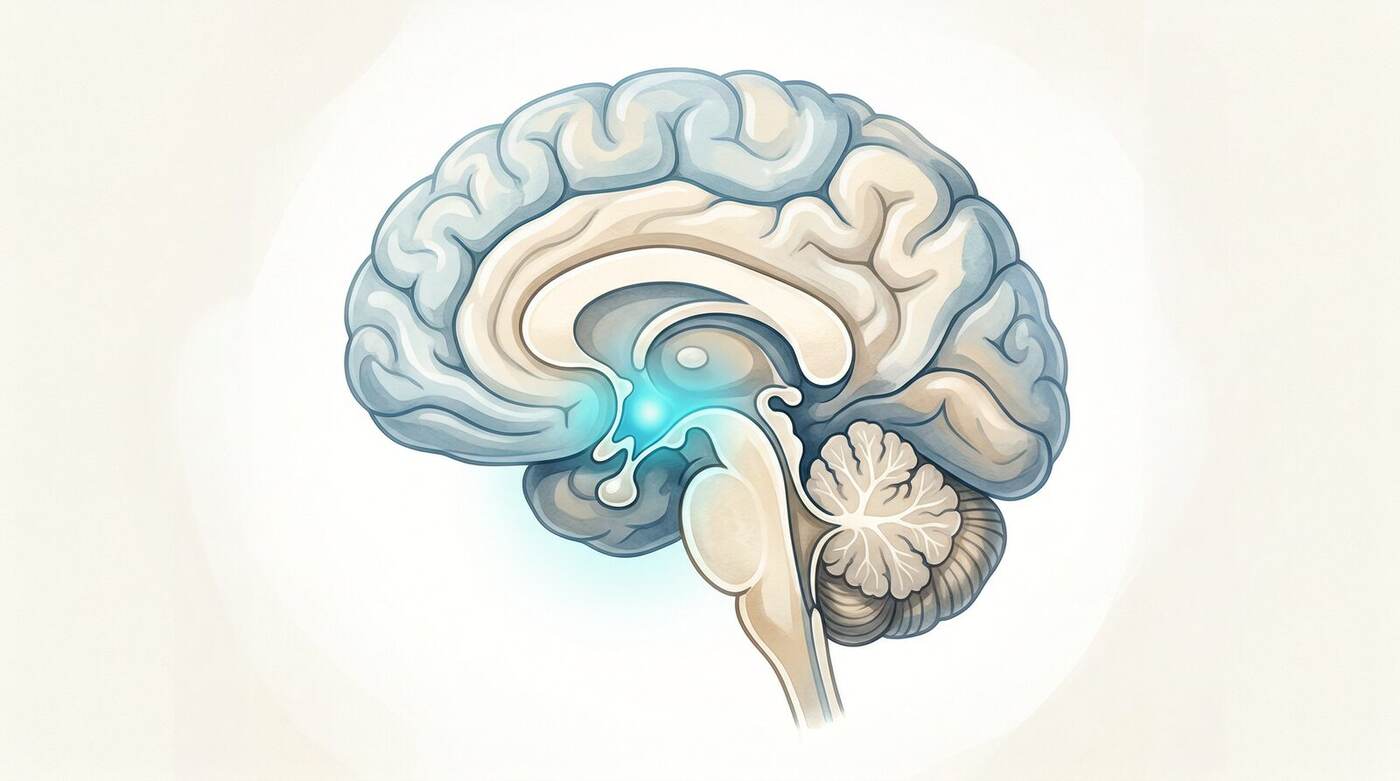
To understand food noise, you need to understand what the brain is doing when it fixates on food. Two systems are primarily involved: the hypothalamic appetite regulation system and the dopamine reward pathway.

Hypothalamic appetite regulation

The hypothalamus is the brain's hunger command center. It integrates signals from hormones like ghrelin (which rises before meals, driving hunger) and leptin (which is produced by fat cells and signals satiety). In a healthy, balanced system, ghrelin tells you to eat and leptin tells you to stop. The hypothalamus coordinates these signals smoothly.

But in people who have experienced chronic overeating or significant weight gain, leptin resistance often develops. The brain stops receiving the "you are full" signal clearly. Ghrelin goes relatively unchecked. The result is a hypothalamic system that keeps sending hunger signals even when your body does not need fuel. This is one of the core biological drivers of food noise.

The dopamine reward system

The second system is the dopamine reward pathway, centered in areas like the nucleus accumbens and ventral tegmental area. Dopamine is the brain's motivation chemical. It does not just make things feel good. It makes you want things. And food, particularly hyperpalatable food high in sugar, fat, and salt, is one of the most powerful natural dopamine triggers the brain knows.

In a dysregulated reward system, food cues generate dopamine responses even without physical hunger. Seeing a fast food advertisement, smelling something baking, walking past a restaurant, all of these can trigger a reward-seeking cascade that manifests as craving, preoccupation, and the compulsive desire to eat. Research by Volkow and colleagues published in Nature Reviews Neuroscience demonstrated that the brains of people with obesity show measurably heightened activity in reward-related regions when exposed to food cues, activity that persists even when those people are not hungry and have no physical need to eat. The neuroscience of food noise is not metaphorical. It is visible on a brain scan.

Brain appetite regulation and food noise pathways
The hypothalamus and dopamine reward centers are the two primary neurological drivers of food noise. GLP-1 acts on receptors in both regions.
92%
of GLP-1 patients report significant reduction in food noise within the first months of treatment
Based on patient-reported outcome surveys across GLP-1 telehealth platforms

How common is food noise?

Food noise is more prevalent than most people realize, partly because until recently there was no name for it. The term entered mainstream awareness largely through the experiences of GLP-1 patients who, after starting treatment, described the quieting of their food thoughts as one of the most profound and unexpected changes of their lives. The contrast was stark enough that it made the original experience visible and nameable.

Research and clinical observation suggest that food noise is especially common in people who have struggled with weight for years, who have cycled through repeated diets, or who have a history of emotional eating. It is not unique to any one body type or demographic, but it is disproportionately reported in people for whom food has been a persistent source of preoccupation, stress, and emotional negotiation.

A study by Blundell and colleagues published in Diabetes, Obesity and Metabolism examining the cognitive effects of once-weekly semaglutide found significant improvements in control of eating, craving scores, and food preoccupation compared to placebo. What those numbers represent, in lived experience, is the difference between a mind that is constantly occupied with food and one that is not.

Many people carry food noise for so long that they stop recognizing it as abnormal. They assume everyone thinks about food this much. When GLP-1 quiet it, the revelation is often shocking: "I didn't realize how loud it was until it went quiet."

How GLP-1 reduces food noise

GLP-1 (glucagon-like peptide-1) is a hormone naturally produced in the gut after eating. In its natural form it is short-lived, broken down within minutes. GLP-1 receptor agonists like semaglutide are synthetic versions engineered to last much longer, activating the same receptors throughout the week rather than for just a few minutes after a meal.

The appetite-suppressing effects of GLP-1 on the digestive system are well documented. What is less widely understood is how profoundly these medications act on the brain itself. As Drucker outlined in his landmark review in Cell Metabolism, GLP-1 receptors are expressed throughout the central nervous system, including in precisely the regions responsible for food noise.

There are three primary brain-level mechanisms through which GLP-1 reduces food noise:

  • Hypothalamic receptor activation: GLP-1 acts directly on appetite centers in the hypothalamus, reducing ghrelin-driven hunger signals at their neurological source rather than simply trying to override them downstream. This is why the appetite reduction feels different from willpower. It happens before the craving fully forms.
  • Reward pathway dampening: GLP-1 receptors in the nucleus accumbens and limbic system reduce dopamine-driven food-seeking behavior. The medication decreases how rewarding food cues feel at the neurological level. Walking past a bakery still registers consciously. But the compulsive pull is dramatically reduced.
  • Gastric slowing and satiety signaling: GLP-1 slows gastric emptying, extending the physical experience of fullness after meals. This reduces the window in which the brain is sending "I need food" signals, which in turn reduces the frequency of food-related intrusive thoughts.

Together these effects do not just reduce how much you eat. They change how often and how intensely you think about eating. For most patients, this brain-level change is what feels most significant. Weight loss is visible. But the quiet in your head is the change that people describe as life-altering.

Take our free 2-minute quiz to see if GLP-1 is right for you.

No commitment. A licensed provider reviews your answers personally.

Take the Free Quiz →

What to expect: a week-by-week timeline

One of the most common questions from patients starting GLP-1 therapy is: how soon will I feel the difference? The answer varies. But there is a recognizable pattern that emerges across thousands of patient experiences.

Weeks 1 to 2: The first quiet moments

Most patients begin at a low starting dose designed to minimize side effects. Even at this early stage, many report the first flickers of change. Food thoughts still appear, but there are gaps. Moments where food is simply not on your mind. For people who have had food noise for years or decades, these gaps feel remarkable. Small, but undeniable.

Month 1: Meaningful reduction

By the end of the first month, as the dose begins to increase, most patients report a significant and consistent reduction in food noise. Cravings are still present but more manageable. The compulsive pull toward the kitchen between meals weakens. Social eating situations feel less fraught. Many patients describe this period as the first time food has felt neutral in a very long time.

Month 3 and beyond: Food as fuel, not fixation

At therapeutic doses and with sustained treatment, the majority of patients describe a qualitative shift in their relationship with food. It becomes something they eat when hungry rather than something they think about constantly. Meals are satisfying and then finished. The mental energy that was previously consumed by food thoughts becomes available for other things. Work. Relationships. Interests that food noise had been quietly crowding out.

"I didn't realize how much mental energy I was spending on food every single day until it stopped. It was like the volume got turned down on a noise I had stopped noticing."

Kind MD patient, 52  |  4 months on treatment

"I eat when I'm hungry and I stop when I'm full and that's it. I didn't know it could be that simple. I thought the way I was was just who I was."

Kind MD patient, 47  |  6 months on treatment

Food noise vs. hunger: an important distinction

This distinction matters and is often misunderstood. Hunger is a healthy, necessary biological signal. It tells you that your body needs energy. You should honor it. GLP-1 medications do not eliminate hunger. They reduce the inappropriate noise layered on top of it.

Think of it this way. Healthy hunger is a clear bell. You hear it, you eat, it stops. Food noise is a radio left on in the background, playing the same craving channel on loop regardless of whether your body actually needs food. GLP-1 turns off the radio. The bell still works fine.

This is why patients on GLP-1 therapy do not report feeling starved or deprived. They eat when they are hungry. They simply stop being visited by false hunger signals and obsessive food thoughts between those real hunger cues. The experience is not restriction. It is clarity.

"For most patients, the reduction in food noise is more life-changing than the number on the scale. It is the feeling of finally being free."

Kind MD Team

Coping strategies alongside GLP-1

GLP-1 medications address the biological roots of food noise. But food noise, for many people, has also created psychological habits and coping patterns that do not automatically disappear when the neuroscience changes. Combining GLP-1 therapy with behavioral strategies can accelerate the change and make it more durable.

Mindful eating

Mindful eating involves slowing down and paying attention to the sensory experience of eating: taste, texture, hunger level before and after. For people with a long history of food noise, meals have often been rushed, distracted, and driven by compulsion rather than enjoyment. Practicing mindful eating helps rebuild the experience of eating as something functional and pleasant rather than fraught.

Cognitive behavioral therapy for emotional eating

If food noise is accompanied by emotional eating, cognitive behavioral therapy (CBT) can be a powerful complement to GLP-1. CBT helps identify the thought patterns and emotional triggers that lead to eating in the absence of hunger, and builds alternative coping strategies. GLP-1 reduces the biological pull. CBT addresses the habitual and emotional dimensions.

Food thought journaling

Some patients find it useful, especially early in treatment, to briefly log when food thoughts arise and what precedes them. Not to judge the thoughts, but to understand their patterns. Stress? Boredom? Certain times of day? Identifying the triggers reduces their power and creates space between the impulse and the response.

Before GLP-1 vs. after GLP-1: what changes

The contrast between life with food noise and life without it can be hard to describe. This table captures what patients most commonly report across the two experiences.

Aspect Before GLP-1 After GLP-1
Thinking about food Constant, intrusive, hard to redirect Occasional, manageable, easy to dismiss
Walking past a bakery Overwhelming urge to stop Notice the smell, keep walking
After eating a meal Already planning the next one Satisfied, move on with your day
Late-night cravings Nightly battle requiring real willpower Rare or absent
Portion control Requires constant vigilance and willpower Happens naturally without conscious effort
Emotional eating Primary coping mechanism for stress or boredom Much easier to recognize and redirect
Peaceful meal experience without food obsession
Life without food noise: eating when hungry, stopping when full, and moving on. A simple experience that many patients describe as transformative.

What that table cannot capture is the emotional weight of the left column. Food noise is not just inconvenient. For many people, it is a source of shame, frustration, and quiet despair. It makes you feel like something is wrong with you at a fundamental level. When it lifts, the relief is not just cognitive. It is emotional. It is the feeling of being let off a hook you did not know you were on.

What life looks like without food noise

It is hard to describe the relief of no longer experiencing food noise to someone who has never had it. The closest analogy is finally being able to hear silence after years of background noise you had stopped noticing. When it lifts, you realize how heavy it was.

Without food noise, you eat because you are hungry, not because you are compelled. Meals are pleasant and functional rather than fraught. Cravings arise occasionally, as they do for everyone, but they are manageable and they pass. You do not spend the hours between lunch and dinner negotiating with yourself about whether you deserve a snack.

The freed-up mental bandwidth is significant. Patients report increased focus at work, less anxiety around social eating situations, and a more relaxed relationship with food in all its forms. Shopping for groceries, eating at restaurants, attending celebrations: none of these feel like obstacle courses anymore.

And perhaps most importantly, without food noise, you stop feeling like something is wrong with you. You understand that the struggle was never about willpower. It was about biology. And once the biology is addressed, everything else becomes more manageable.

Food noise is not a personal failing. It is a medical reality. And for the first time, there is a treatment that addresses it at the source.

Frequently asked questions

What is food noise?

Food noise is the constant, involuntary mental chatter about food that occupies your thoughts throughout the day. It includes fixating on your next meal while still eating the current one, persistent cravings, obsessive calorie counting, and an inability to quiet the part of your brain that keeps cycling back to food. It is not a character flaw or lack of willpower. It is a neurological phenomenon driven by dopamine reward pathways and dysregulated hunger hormones like ghrelin and leptin.

Does GLP-1 eliminate food noise completely?

GLP-1 medications significantly reduce food noise for most patients, but rarely eliminate it entirely. In patient surveys, over 90% of GLP-1 users report meaningful reduction in food-related intrusive thoughts. The effect varies by individual. Some patients describe the quiet as nearly total. Others say it becomes manageable where it was once overwhelming. Either way, the change is typically described as one of the most impactful aspects of treatment.

How quickly does food noise decrease on GLP-1?

Most patients notice the first reduction in food noise within one to two weeks of starting GLP-1 therapy, even at the lowest starting dose. The effect deepens as the dose increases over the first one to two months. By month three, many patients describe food as something they simply eat when hungry rather than a constant preoccupation. Some individuals experience the change more gradually, and individual response varies.

Is food noise the same as hunger?

No. They are distinct experiences. Hunger is a physical signal arising from the body needing fuel: an empty stomach, dropping blood sugar, a clear biological cue. Food noise is a cognitive experience, the relentless mental preoccupation with food that occurs regardless of physical hunger. GLP-1 does not eliminate healthy hunger signals. It removes the obsessive, reward-driven noise layered on top of them, allowing you to eat in response to real physical need instead of compulsion.

Can food noise come back after stopping GLP-1?

Yes. For many patients, food noise returns when GLP-1 therapy is discontinued because the underlying neurological and hormonal drivers, leptin resistance, dysregulated dopamine signaling, hypothalamic dysfunction, are still present. This is one of the key reasons obesity medicine specialists increasingly view GLP-1 treatment as a long-term management tool rather than a short-term fix. The biology of obesity does not resolve permanently after a few months of treatment.

Does everyone with obesity experience food noise?

Not everyone, but research and clinical observation suggest the majority do. Food noise is especially prevalent in people who have struggled with weight for years, gone through repeated diet cycles, or have a history of emotional or reward-driven eating. Many people did not have a name for the experience until GLP-1 medications made the contrast vivid. The absence of a term does not mean the absence of the experience.

Can therapy help with food noise alongside GLP-1?

Yes. Cognitive behavioral therapy and mindfulness-based approaches can be meaningful complements to GLP-1 treatment. GLP-1 addresses the biological drivers of food noise: the dopamine dysregulation, the hormonal imbalances, the hypothalamic signaling. Therapy helps reshape the habitual thought patterns and emotional coping mechanisms that formed around the noise over years. Together they address both the biology and the psychology of the experience.

What is the difference between emotional eating and food noise?

Emotional eating is eating in response to emotions: stress, boredom, loneliness, sadness. Food noise is the constant cognitive preoccupation with food that persists regardless of emotional state. They often coexist and reinforce each other. But food noise can also be purely biological, running as background mental chatter in people who do not identify as emotional eaters. GLP-1 addresses both because it reduces the reward-driven pull of food at the neurological level, regardless of whether emotions are the primary trigger.