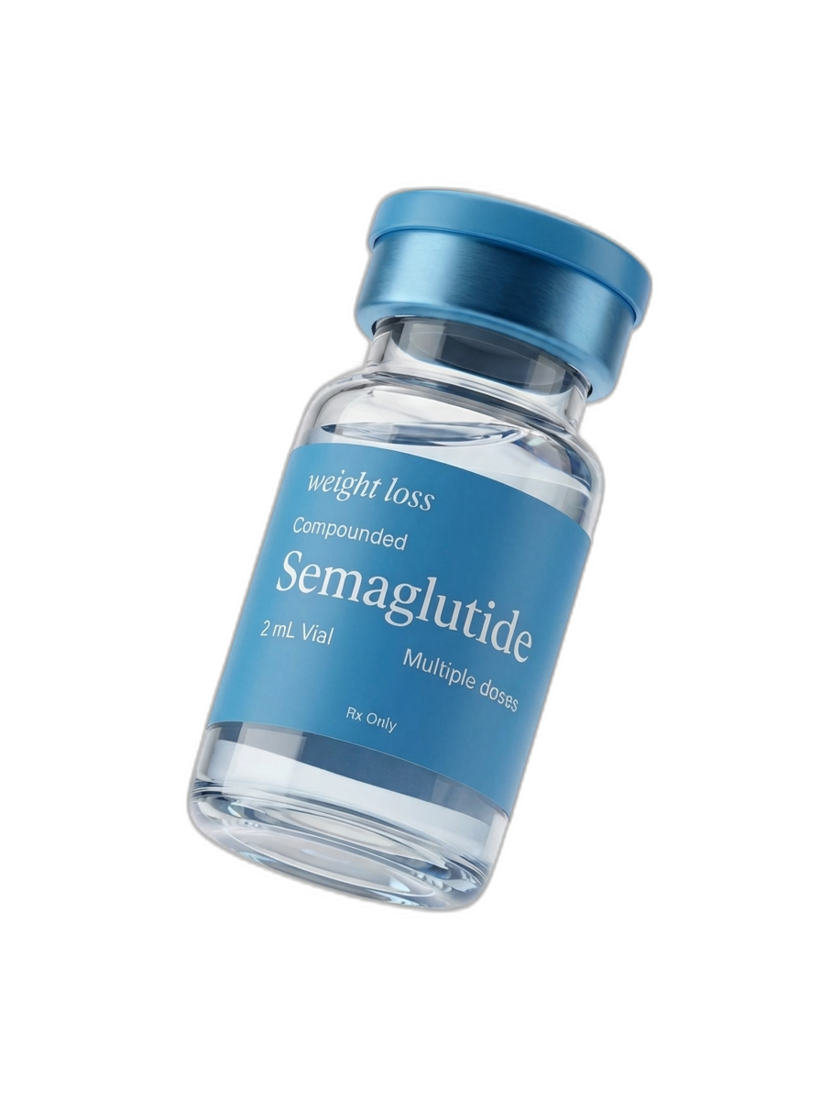
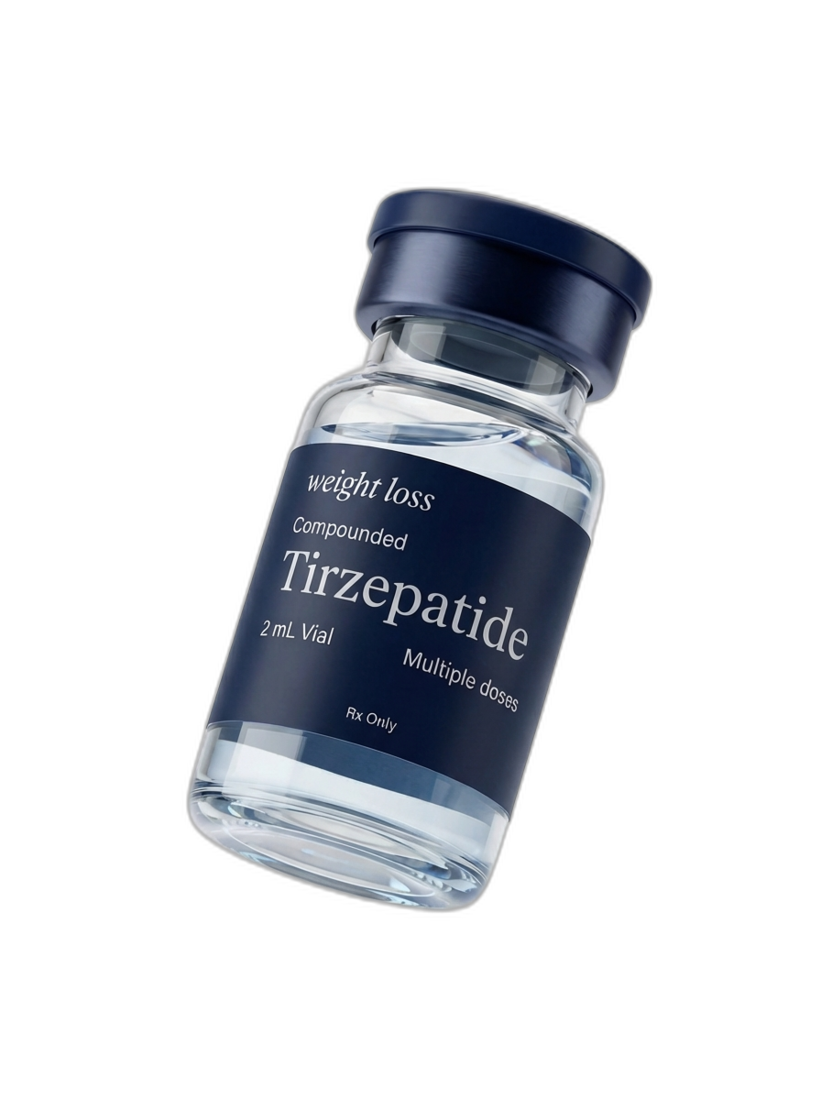

- GLP-1 is a hormone involved in signals related to appetite and glucose regulation.
- Trial averages describe named study groups; they are not personal forecasts.
- STEP 1 and SURMOUNT-1 have specific regimens, populations and follow-up periods.
- Neither study evaluated a Kind MD compounded preparation.
- A licensed healthcare provider makes an independent prescribing decision when clinically appropriate.
What does GLP-1 refer to?
GLP-1, short for glucagon-like peptide-1, is a hormone released by the body after eating. It participates in signals related to appetite and glucose regulation. The term “GLP-1” can refer to the natural hormone, a medication class, or a study regimen, so context matters.
Public conversations often group different products and studies under one short label. That shorthand can hide differences in the named product, dose, population and follow-up period. This page keeps those details visible.
What does GLP-1 signaling do?
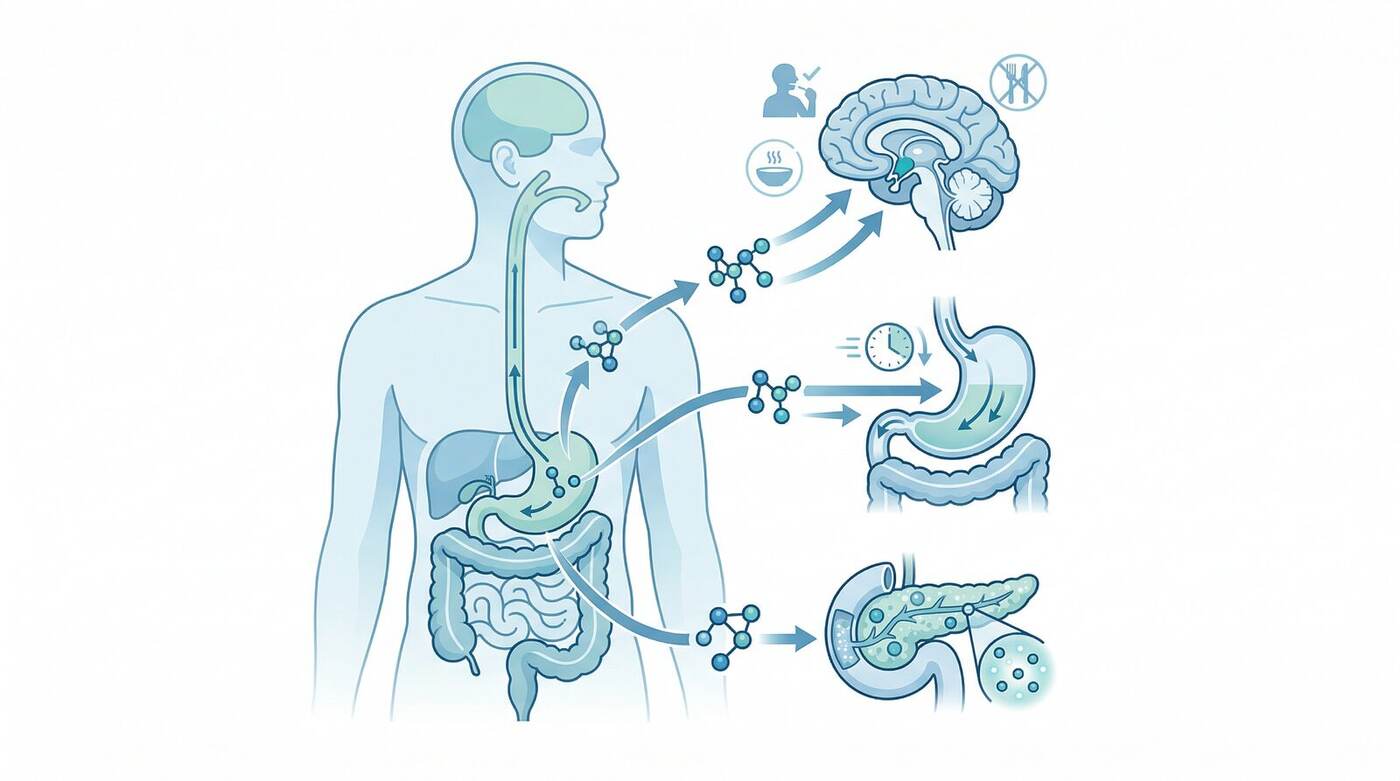
Natural GLP-1 is one part of the body’s signaling around eating. Research and clinical conversations may discuss appetite, digestion and glucose regulation together, but a general explanation is not an assessment of whether a treatment is appropriate for one person.
- Appetite-related signals: people may use GLP-1 language when discussing how treatment affects hunger or food-related thoughts.
- Digestive questions: a person’s experience can depend on the prescribed product, instructions and health history.
- Glucose questions: glucose-related decisions belong with the prescribing provider and the person’s existing care team.
These are areas for education, not a universal treatment protocol. The prescription, dispensing-pharmacy materials and provider guidance control what a person should do.
How should you read treatment evidence?
A study average is a group result measured under a named regimen, population, comparator and follow-up period. It can help a reader understand what a study measured. It cannot predict one person’s result or establish that a different preparation will produce the same result.
When a statistic appears, ask four questions: Which study is it? What did participants receive? Who was included? How long were they followed? A number without those details is easy to overread.
What did STEP 1 and SURMOUNT-1 report?
STEP 1 (PubMed 33567185) studied semaglutide 2.4 mg weekly in 1,961 adults for 68 weeks and reported -14.9% vs -2.4% placebo. SURMOUNT-1 (PubMed 35658024) studied tirzepatide 5/10/15 mg weekly in 2,539 adults for 72 weeks and reported -15.0/-19.5/-20.9% vs -3.1% placebo.
Neither study evaluated a Kind MD compounded preparation. The results do not apply directly to a compounded preparation, and individual results vary.
Primary sources: STEP 1 on PubMed and SURMOUNT-1 on PubMed.
What remains product- and provider-specific?
A study result does not answer which treatment, dose, schedule or preparation is appropriate for you. Those questions depend on the actual prescription, your health history, other medicines and the provider’s independent clinical judgment.
Kind MD is a telehealth platform that connects eligible patients with licensed healthcare providers who may prescribe compounded semaglutide or tirzepatide when clinically appropriate. A licensed healthcare provider makes an independent prescribing decision when clinically appropriate.
Questions to bring to a provider
- Which product and instructions are being considered for my situation?
- What information about my health history or current medicines matters to this decision?
- Which questions should I direct to the dispensing pharmacy?
- How should I contact the care team if my experience raises a concern?
- Which parts of the evidence apply to the named study, and which parts remain unknown for my situation?
Good questions keep evidence, prescription instructions and personal care decisions in their proper lanes.