On GLP-1 medication, prioritize lean protein (80 to 120 grams per day), non-starchy vegetables, whole grains, and healthy fats. Avoid greasy, fried, and sugary foods that worsen nausea. Stay hydrated with 64 to 80 ounces of water daily. Small, frequent meals work better than large ones, especially in the first four weeks.

Key Takeaways
  • Aim for 80 to 120 grams of protein per day (about 1.0 to 1.2g per kilogram of body weight) to protect muscle mass during weight loss.
  • Fill half your plate with non-starchy vegetables, a quarter with lean protein, and a quarter with whole grains at each meal.
  • Avoid high-fat foods, fried foods, heavy creams, sugary drinks, carbonated beverages, and alcohol, especially in the first four weeks.
  • Drink 64 to 80 ounces of water daily. Sip steadily throughout the day rather than in large amounts at once.
  • Eat slowly (at least 20 minutes per meal), protein first, and stop when you feel comfortably full.

Why nutrition matters more on GLP-1

GLP-1 medications like semaglutide and tirzepatide work by reducing appetite, slowing gastric emptying, and helping your body regulate blood sugar more effectively. The result is that most people eat significantly less without trying.

That reduced intake is the point. But it creates a real challenge. When you eat less, every bite matters more. If the calories you do eat come mostly from processed foods, refined carbs, or high-fat convenience options, your body misses the protein, fiber, and micronutrients it needs to stay strong throughout treatment.

Research shows that weight loss on GLP-1 medications can include a meaningful percentage of lean muscle mass alongside fat loss. A 2021 study in the New England Journal of Medicine reported average weight loss of nearly 15% of body weight on semaglutide, but some of that loss can come from muscle without adequate protein intake. Nutrition is your main tool to make sure the weight you lose is fat, not muscle.

Getting this right makes a real difference in how you feel, how quickly your results appear, and how well your metabolism responds long after treatment ends.

Protein first: your most important target

If there is one nutrition rule to follow on GLP-1, it is this: eat your protein first. Before the vegetables, before the carbs, before anything else on your plate.

When your appetite is suppressed, it is easy to fill up on easy, low-protein foods and miss your daily target. Starting with protein ensures you get the most important nutrient in when you are hungriest.

30%
of weight lost on GLP-1 can come from lean muscle mass without adequate protein intake, according to a 2021 review in Obesity Reviews. Meeting daily protein targets significantly reduces that number and preserves your metabolic rate.

Research published in the American Journal of Clinical Nutrition supports a target of at least 1.0 to 1.2 grams of protein per kilogram of body weight per day for adults in a calorie deficit. For most patients on GLP-1, this works out to 80 to 120 grams per day.

Best protein sources, ranked

  1. Chicken breast and turkey breast -- high protein, low fat, very easy to digest
  2. White fish (cod, tilapia, halibut) -- light on the stomach, gentle on nausea
  3. Salmon and tuna -- adds omega-3 fats alongside protein
  4. Eggs and egg whites -- versatile, fast, and easy to eat in small amounts
  5. Plain Greek yogurt (2% or nonfat) -- also provides probiotics and calcium
  6. Low-fat cottage cheese -- high protein per calorie, mild flavor
  7. Edamame and tofu -- plant-based options with complete amino acids
  8. Lean ground beef (90% or leaner) -- also provides iron and B12
  9. Low-fat string cheese and ricotta -- good for snacks when appetite is low
  10. Protein shakes (whey or plant-based) -- useful when eating feels difficult early on

Take our free 2-minute quiz to find out if you qualify for a personalized treatment plan.

No commitment. A licensed provider reviews your answers personally.

Take the Free Quiz →

Best foods to eat on GLP-1

Beyond protein, a well-structured GLP-1 diet focuses on foods that are easy to digest, rich in fiber, and nutrient-dense. Because you are eating less overall, quality becomes more important than quantity.

Non-starchy vegetables

Vegetables are high in fiber, vitamins, and minerals while being low in calories. They also support healthy digestion, which matters because GLP-1 slows gastric motility and constipation is a common side effect. Good choices include spinach, kale, broccoli, zucchini, cucumber, bell peppers, asparagus, and leafy salad greens. Aim to fill at least half your plate at each meal.

Whole grains

Complex carbohydrates provide steady energy and fiber without the blood sugar spikes of refined carbs. Oats, quinoa, brown rice, farro, and whole-grain bread all work well in moderate portions. Target 100 to 150 grams of carbohydrates daily from whole-food sources.

Healthy fats in moderation

Avocado, olive oil, nuts, and seeds provide unsaturated fats that support hormone function and help your body absorb fat-soluble vitamins like D and K. Keep portions small since fats are calorie-dense and large amounts of fat can worsen nausea. A tablespoon of olive oil or a quarter of an avocado is usually enough per meal.

Fruits

Berries, apples, pears, and citrus fruits offer fiber, antioxidants, and natural sweetness. They are a much better choice than processed desserts when a craving hits. Limit high-sugar tropical fruits like mango and pineapple if you are managing blood sugar.

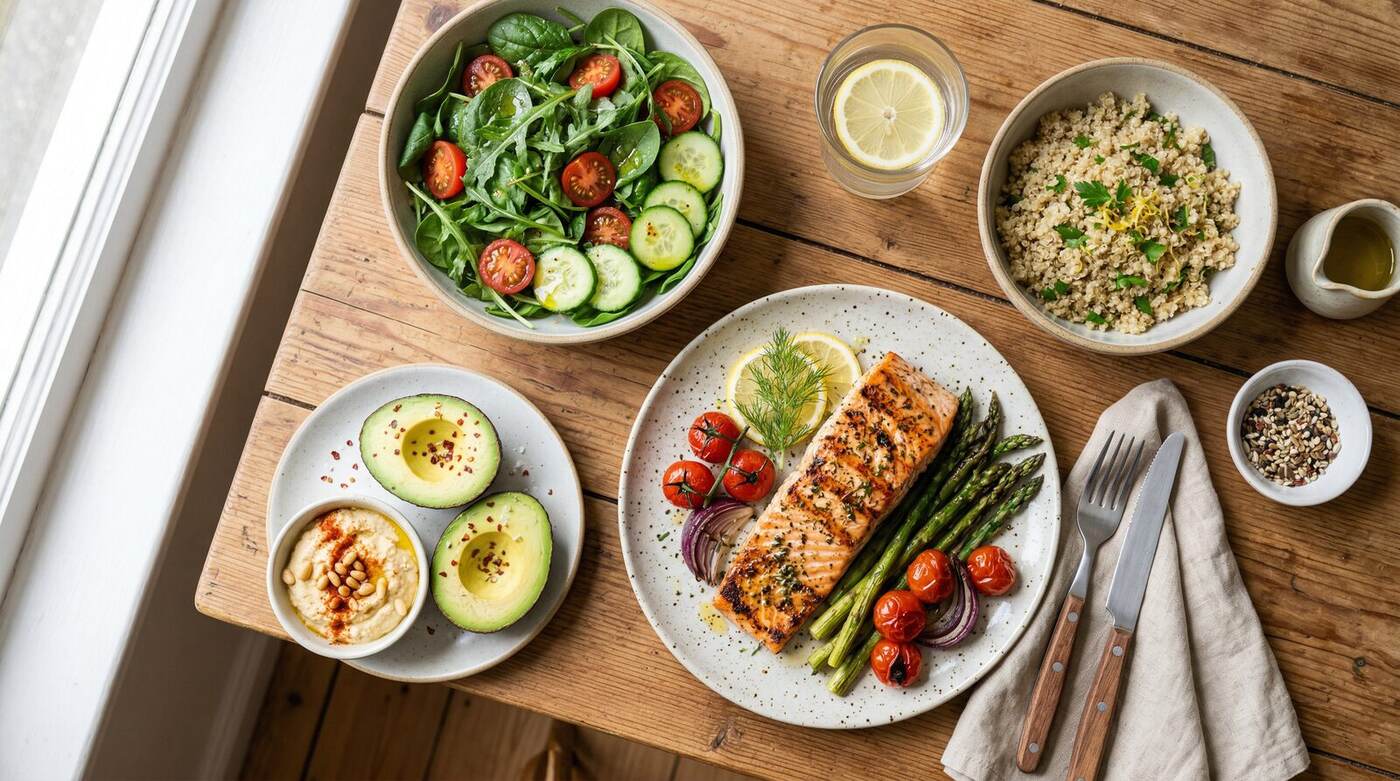
Balanced meal plate with protein vegetables and complex carbohydrates
A well-structured GLP-1 plate: half vegetables, a quarter lean protein, a quarter whole grains.

Foods to avoid on semaglutide

Certain foods are particularly problematic on GLP-1 medication. Because gastric emptying is slowed, your stomach holds food longer. High-fat, high-sugar, and carbonated options can intensify nausea, bloating, and reflux significantly, especially in the first four to eight weeks.

Hydration and electrolytes

Dehydration is more common on GLP-1 than most patients expect. There are two reasons. First, the medication significantly reduces appetite, and many people also drink less without realizing it. Second, slower gastric emptying changes how your body processes fluids.

Dehydration shows up as fatigue, headaches, constipation, muscle cramps, and dizziness. These symptoms are often mistaken for medication side effects when they are actually fixable with consistent hydration.

Aim for 64 to 80 ounces (8 to 10 cups) of plain water per day. Sip steadily throughout the day rather than drinking large amounts at once, which can worsen nausea. Herbal teas, broth, and diluted electrolyte drinks count toward your total. Coffee and caffeinated tea are mildly diuretic, so balance each cup with an extra glass of water.

Electrolytes matter too

When you eat and drink less overall, electrolyte intake drops. Sodium, potassium, and magnesium are worth paying attention to. Bone broth, bananas, sweet potatoes, leafy greens, and nuts help naturally. If you experience muscle cramps or persistent fatigue, a low-sugar electrolyte supplement like LMNT or Liquid IV can help. Avoid sweetened sports drinks with high sugar content.

Hydration and supplement essentials for GLP-1 treatment
Staying ahead of dehydration is one of the most underrated habits for GLP-1 success.

Meal structure and timing

How you eat on GLP-1 matters nearly as much as what you eat. The medication slows how quickly food moves through your stomach, which changes the rules around meal size and speed.

Eat slowly

Take at least 20 minutes per meal, ideally longer. Eating quickly is a primary trigger for nausea and discomfort on GLP-1. The stomach fills faster than usual, and your brain needs time to receive the fullness signal. Put down your utensils between bites. Chew thoroughly. Pause and breathe.

Protein first, then vegetables, then carbs

Structure each meal in this order. Start with your protein source, eat your vegetables next, and save carbohydrates for last. This ensures you hit your protein target even if you get full before finishing everything on your plate. It also supports better blood sugar control throughout the day.

Smaller plates, more often

Four to six smaller meals spread across the day work better than two or three large ones. Smaller portions put less strain on a slow-moving stomach and reduce the risk of nausea and reflux. A small breakfast, a mid-morning snack, a modest lunch, an afternoon snack, and a light dinner is a format many patients find sustainable.

Stay upright after eating

Avoid lying down for at least 30 minutes after meals. Slowed gastric emptying combined with reclining increases the risk of acid reflux. Even a short walk after dinner can help digestion move along.

Managing nausea through food choices

Nausea is the most common side effect in the first two to four weeks on GLP-1 medication. For most patients it fades as the body adjusts. Your food choices during this period make a meaningful difference in how manageable it feels.

Foods that help with nausea

If nausea persists or interferes with eating enough to meet your protein needs, contact your Kind MD provider. Dose timing adjustments and other strategies can help significantly.

Supplements to consider

Because GLP-1 significantly reduces food intake, micronutrient gaps become a real risk over time. These supplements are worth discussing with your provider.

Always discuss new supplements with your provider before starting, especially if you take other medications.

Macronutrient targets at a glance

Use this table as a reference for daily nutrition targets on GLP-1. These are general guidelines based on research for adults in a calorie deficit. Your provider may adjust targets based on your individual situation.

Nutrient Daily Target Why It Matters Best Sources
Protein 80-120g (1.0-1.2g/kg) Preserves muscle mass during weight loss Chicken, fish, eggs, Greek yogurt, cottage cheese
Fiber 25-30g Supports digestion, reduces constipation Vegetables, berries, oats, psyllium husk
Fat 40-60g (limit) Excess fat triggers nausea on GLP-1 Avocado, olive oil, nuts, salmon
Water 64-80 oz Prevents dehydration from reduced intake Water, herbal tea, bone broth
Carbs 100-150g Steady energy, blood sugar stability Sweet potato, quinoa, oats, fruit

Sample meal ideas

These ideas are designed to hit protein targets while staying gentle on the stomach. Portions are intentionally modest. Eat slowly, stop when comfortable, and adjust based on your own hunger cues.

Breakfast ideas

Option What It Looks Like Protein
Option A 2 scrambled eggs with spinach, 1/2 cup plain Greek yogurt, small handful of blueberries ~24g
Option B Protein smoothie: 1 scoop whey, 1/2 cup frozen berries, 1 cup almond milk, handful of spinach ~25g
Option C 1/2 cup oatmeal topped with 2 tbsp almond butter and 1 hard-boiled egg on the side ~18g

Lunch ideas

Option What It Looks Like Protein
Option A 4 oz grilled chicken over a large salad with cucumbers, cherry tomatoes, and lemon-olive oil dressing ~28g
Option B 1/2 cup cottage cheese with sliced cucumber and 2 oz smoked salmon on whole-grain crackers ~26g
Option C Tuna wrap: 3 oz canned tuna, avocado, lettuce in a small whole-wheat tortilla ~24g

Dinner ideas

Option What It Looks Like Protein
Option A 4 oz baked salmon with roasted broccoli and 1/3 cup cooked quinoa ~28g
Option B 4 oz baked cod with steamed zucchini and 1/4 cup brown rice ~26g
Option C 3 oz lean ground turkey over cauliflower rice with roasted bell peppers ~22g

Snack ideas

Week-by-week guidance: early adjustment vs. maintenance

Weeks 1 to 4: The adjustment period

The first four weeks are when nausea, fatigue, and GI discomfort are most common. Your dose is typically at the lowest level, but even so, the body is adjusting to a significant change in how the stomach works. This is not the time to optimize, it is the time to get through it.

What to focus on in weeks 1 to 4:

It is normal to eat 800 to 1,200 calories per day in the early weeks. Do not force more. Focus on hitting your protein minimum and staying hydrated.

Month 2 and beyond: Settling in

As nausea subsides and your body adjusts to the medication, you can begin building a more structured and varied diet. Your dose may increase during this period, which can bring nausea back temporarily with each adjustment.

What changes in month 2 and beyond:

Weight loss tends to be fastest in months 2 through 6. Keeping protein intake high throughout this period is the most protective thing you can do for your long-term metabolism.

Frequently asked questions

What should I eat on GLP-1 to lose weight faster?

Focus on lean protein (80 to 120 grams per day), non-starchy vegetables, and whole grains. Protein is the single most important dietary habit on GLP-1 because it preserves muscle mass and keeps your metabolism from slowing. Avoid processed foods, fried items, and added sugars. Consistent hydration also matters more than most people expect.

Can I eat carbs while on semaglutide?

Yes. Whole-food carbohydrates like oats, quinoa, sweet potato, and brown rice are appropriate and provide steady energy and fiber. Aim for 100 to 150 grams of carbohydrates daily from whole-food sources. Limit refined carbs and added sugars, which spike blood sugar and tend to worsen nausea on GLP-1.

What foods make GLP-1 side effects worse?

High-fat and greasy foods are the main culprits. Fried food, fast food, heavy sauces, and fatty cuts of meat sit in the stomach much longer when gastric emptying is slowed, intensifying nausea and discomfort. Carbonated drinks, alcohol, and very spicy foods also commonly worsen symptoms, especially in the first four to eight weeks.

How much water should I drink on semaglutide?

Aim for 64 to 80 ounces (8 to 10 cups) of water per day. Since GLP-1 suppresses both hunger and thirst signals for some patients, dehydration is more common than expected. Sip steadily throughout the day. Herbal teas and broth count toward your total. Avoid large amounts at once, which can trigger nausea.

Is intermittent fasting safe while on GLP-1?

Not recommended without medical supervision. GLP-1 already creates a significant calorie deficit through appetite suppression. Adding an aggressive fasting window makes it very difficult to meet your protein and micronutrient needs, which accelerates muscle loss. If you are interested in time-restricted eating, discuss it with your Kind MD provider before starting.

What supplements should I take on GLP-1?

A daily multivitamin is a good baseline. Vitamin B12 is worth adding separately because reduced food intake often leads to deficiency over time. Vitamin D is frequently low in adults generally, and absorption may decrease with lower fat intake. A fiber supplement like psyllium husk helps with constipation. Ask your provider before starting anything new.

What should I eat in the first weeks on GLP-1?

Weeks 1 to 4 are the adjustment period. Focus on bland, easy-to-digest foods: plain crackers, oatmeal, toast, banana, rice, broth, and plain yogurt. Small, frequent meals every 3 to 4 hours work better than larger ones. Keep protein intake as high as you can manage, even if total appetite is very low.

How do I get enough protein on GLP-1 when I am not hungry?

Eat protein first at every meal before touching anything else. Greek yogurt, cottage cheese, protein shakes, hard-boiled eggs, and edamame are high-protein foods that require minimal preparation and are easy to eat in small amounts. Even half a serving of a high-protein food adds up across the day. Track your grams for the first few weeks so you know where you stand.