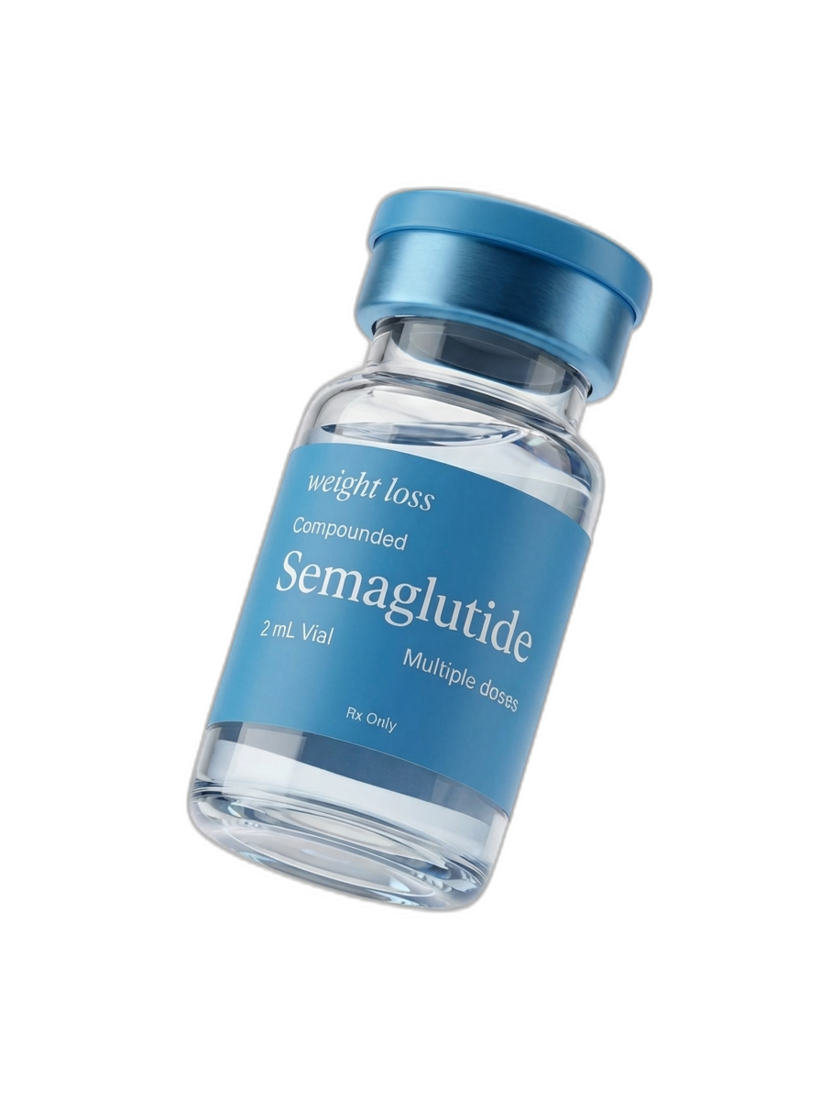
- Compounded semaglutide and Ozempic contain the same active ingredient: semaglutide, a GLP-1 receptor agonist. The molecule is identical.
- They differ in who makes them. Ozempic is manufactured by Novo Nordisk and FDA-approved. Compounded semaglutide is prepared by licensed compounding pharmacies under FDA Section 503A and 503B oversight.
- The cost difference is significant. Ozempic runs $900 to $1,200 per month. Compounded semaglutide typically costs $200 to $500 per month.
- Compounding became widely available because Ozempic and Wegovy appeared on the FDA drug shortage list repeatedly, creating a documented access gap.
- Safety depends on the pharmacy. 503B-designated outsourcing facilities follow FDA-inspected manufacturing standards. Always verify your pharmacy's credentials before starting treatment.
What is the difference between compounded semaglutide and Ozempic?
Compounded semaglutide and Ozempic contain the same active ingredient: semaglutide, a GLP-1 receptor agonist. Ozempic is manufactured by Novo Nordisk and FDA-approved for type 2 diabetes management. Compounded semaglutide is prepared by a licensed compounding pharmacy using semaglutide as the active pharmaceutical ingredient, under a different regulatory framework. The drug molecule is the same. The manufacturing path and cost are not.
If you have searched for weight loss treatment in the past few years, you have almost certainly come across both terms. Ozempic became a cultural shorthand for GLP-1 medication broadly. Compounded semaglutide emerged as a lower-cost alternative when the brand-name versions became difficult to obtain or afford. Understanding what makes them alike and what makes them different is essential before making a decision about your care.
The confusion is understandable. Marketing, media coverage, and social media discussion often blur the lines. This article gives you a clear, factual breakdown based on the clinical and regulatory record, not advertising.
Are they the same medication?
At the molecular level, yes. Both contain semaglutide, a GLP-1 (glucagon-like peptide-1) receptor agonist. The active ingredient in a compounded semaglutide formulation is the same chemical compound that Novo Nordisk uses in Ozempic and Wegovy. It binds to the same receptors in the brain and gut, triggers the same hormonal cascades, and produces the same categories of effect: reduced appetite, slower gastric emptying, and improved blood sugar regulation.
A 2021 review published in Diabetes, Obesity and Metabolism confirmed that the pharmacodynamic profile of semaglutide is determined by the molecule itself, including its fatty acid chain modification that enables once-weekly dosing and resistance to enzymatic degradation.[1] That structure is the same regardless of who formulates it.
The meaningful differences are not pharmacological. They are regulatory, manufacturing-related, and economic. Ozempic goes through Novo Nordisk's controlled manufacturing process, FDA approval review, and proprietary pen delivery system. Compounded semaglutide is prepared in smaller batches by a licensed pharmacy, typically supplied as a vial with a syringe for self-injection, and does not carry the FDA-approved label that Ozempic does.
"The active pharmaceutical ingredient semaglutide is the same molecule whether it comes from a Novo Nordisk pen or a compounding pharmacy vial. The clinical variables that matter are dosing accuracy, storage, and source verification."
Why does compounded semaglutide exist?
Two forces created the market for compounded semaglutide: drug shortages and cost barriers.
The shortage problem
Ozempic was first approved by the FDA in December 2017 for type 2 diabetes management. When broader awareness of its weight loss effects spread rapidly in 2022 and 2023, demand outpaced Novo Nordisk's manufacturing capacity. Both Ozempic and Wegovy appeared on the FDA's Drug Shortage List, a formal designation that reflects documented supply disruptions in the U.S. market.[2]
Under Section 503A and 503B of the Food, Drug, and Cosmetic Act, licensed compounding pharmacies are permitted to prepare copies of drugs that are on the FDA shortage list when there is a patient-specific clinical need and a valid prescription from a licensed provider.[3] This is a well-established legal pathway. It exists not because of GLP-1 medications specifically, but because drug shortages across many categories have historically created access gaps that compounding pharmacies are uniquely positioned to fill.
The FDA updated its shortage designations for semaglutide products multiple times between 2022 and 2025 as supply and demand conditions shifted. Compounding pharmacies operating under these provisions did so within the legal framework as it existed at each point in time.
The cost problem
Even when Ozempic or Wegovy is available, many patients cannot access it. The list price for Ozempic in the United States is approximately $935 per month as of 2026.[4] Wegovy, approved specifically for weight management, runs $1,300 to $1,600 per month at list price. Insurance coverage for weight loss indications is inconsistent, and many plans exclude it entirely. For patients without coverage, paying $15,000 to $19,000 per year for a medication is not realistic.
Compounding pharmacies source the active pharmaceutical ingredient directly and prepare formulations in-house, without the overhead of brand development, patent amortization, clinical trial debt, or large-scale marketing. The result is a dramatically lower price point: $200 to $500 per month for most compounded semaglutide programs.
Cost comparison: brand vs. compounded
The table below captures the full picture across three semaglutide products. Note that insurance variables can significantly alter out-of-pocket costs for brand-name medications in either direction.
| Feature | Compounded Semaglutide | Ozempic (Novo Nordisk) | Wegovy (Novo Nordisk) |
|---|---|---|---|
| Active ingredient | Semaglutide | Semaglutide | Semaglutide |
| FDA approved | Pharmacy-regulated (503A/503B) | Yes (type 2 diabetes) | Yes (weight management) |
| Manufacturer | Licensed compounding pharmacy | Novo Nordisk | Novo Nordisk |
| Cost per month | $200 to $500 | $900 to $1,200 | $1,300 to $1,600 |
| Requires prescription | Yes | Yes | Yes |
| Insurance coverage | Rarely | Sometimes (diabetes diagnosis) | Sometimes |
| Supply shortages | Generally available | Frequent shortages | Frequent shortages |
| Dosing flexibility | Customizable by provider | Fixed dose pens | Fixed dose pens |
| Delivery format | Multi-dose vial with syringe | Pre-filled auto-injector pen | Pre-filled auto-injector pen |
A note on insurance
Insurance coverage for Ozempic typically requires a type 2 diabetes diagnosis. Wegovy coverage for weight management is more variable and depends heavily on your plan. Even with coverage, step-therapy requirements, prior authorization delays, and high deductibles mean many insured patients still pay substantial out-of-pocket costs for the brand-name products. For those patients, the all-in out-of-pocket cost of compounded semaglutide is often lower even without any insurance benefit applying.
Safety and quality: what to look for
The safety profile of compounded semaglutide depends heavily on the pharmacy preparing it. Not all compounding pharmacies operate at the same standard. Knowing how to evaluate a pharmacy is one of the most important steps in accessing compounded GLP-1 treatment safely.
What separates high-quality compounding pharmacies
The FDA regulates two categories of compounding pharmacy. Section 503A pharmacies are traditional compounding pharmacies that prepare medications for individual patients pursuant to a valid prescription. Section 503B outsourcing facilities are a higher-tier designation: they undergo FDA inspections, follow current Good Manufacturing Practice (cGMP) standards similar to pharmaceutical manufacturers, and are permitted to compound larger quantities for office use in addition to individual prescriptions.[3]
503B facilities represent the gold standard in compounding pharmacy oversight. Kind MD works exclusively with 503B-designated outsourcing facilities that meet cGMP standards, undergo third-party testing for potency and sterility, and maintain proper cold-chain storage protocols throughout fulfillment.
Red flags to avoid
The growth of interest in compounded semaglutide has attracted some bad actors. The following are clear warning signs that a source is not operating safely or legally:
- No prescription required. All legitimate semaglutide, compounded or brand-name, requires a valid prescription from a licensed provider. Any source offering semaglutide without a prescription is operating illegally.
- Unusually low prices. Compounded semaglutide at a legitimate 503B facility has real costs. Prices below $100 per month should raise serious questions about ingredient sourcing and quality.
- "Research use only" labels. This language indicates the product is not pharmaceutical-grade and is not intended for human administration. Purchasing research-grade peptides to self-inject is dangerous and unregulated.
- No licensed prescriber involved. Telehealth companies that provide compounded semaglutide must connect you with a licensed provider who reviews your medical history before prescribing. Automated "click to buy" models without real provider review are a serious safety concern.
- Unverifiable pharmacy credentials. Legitimate compounding pharmacies are licensed by their state board of pharmacy and, in the case of 503B facilities, listed in the FDA's database of registered outsourcing facilities.
FDA status explained
The regulatory distinction between Ozempic and compounded semaglutide is real and worth understanding clearly, without overstating what it means in practice.
Ozempic's FDA approval
Ozempic (semaglutide 0.5mg, 1mg, and 2mg) received FDA approval in December 2017 for improving blood sugar control in adults with type 2 diabetes, and to reduce the risk of major cardiovascular events in adults with type 2 diabetes and established cardiovascular disease.[5] Wegovy (semaglutide 2.4mg) received a separate FDA approval in June 2021 specifically for chronic weight management.[6]
FDA approval means the drug has been evaluated through a structured review process for safety, efficacy, and manufacturing quality. The approval is product-specific: it covers a particular formulation, at particular doses, from a particular manufacturer.
How compounding is regulated
Compounded medications are not FDA-approved. This is a consistent and accurate statement. It is also one that requires context. The FDA has overseen compounding pharmacy regulation for decades across all therapeutic categories. Compounded medications are legal, regulated, and widely used in oncology, pain management, hormone therapy, and pediatric care, among many other fields.
The key regulatory provisions are Sections 503A and 503B of the Federal Food, Drug, and Cosmetic Act, which establish the conditions under which compounding pharmacies can prepare medications, including semaglutide when it appears on the FDA shortage list.[3] Compounded medications prepared under these provisions are not "unapproved drugs" in the sense of being unregulated. They operate within a defined legal and regulatory framework that the FDA actively enforces.
The practical implication for patients: the active ingredient in your compounded semaglutide is the same FDA-approved molecule. The compounded product has not gone through the specific clinical trial and manufacturing review that Ozempic has, which is why working with a high-quality 503B pharmacy and a licensed prescribing provider matters.
Want to know if compounded semaglutide is right for your situation?
A Kind MD provider reviews your full history personally. No commitment required.
Take the Free 2-Minute Quiz →Which one should you choose?
There is no universal answer. The right choice depends on your specific situation, including your insurance coverage, budget, availability in your area, and the recommendation of your licensed provider. Here is a practical framework for thinking it through.
Your insurance covers it with manageable co-pays. You have a type 2 diabetes diagnosis and prefer the FDA-approved label. You are already stable on a brand-name product and not facing cost barriers.
The brand-name cost is out of reach without insurance coverage. Brand-name products are unavailable or backordered. You want dosing flexibility as you titrate. You are starting treatment and want to confirm tolerability before committing to a higher-cost option.
A few other practical considerations worth knowing:
- Dosing flexibility. Compounded semaglutide can be prepared at custom concentrations, which gives your provider more granular control over your titration schedule. Brand-name pens come in fixed doses, which can make micro-adjustments more difficult.
- Administration. Compounded semaglutide is typically drawn from a vial with a syringe. Ozempic and Wegovy use pre-filled auto-injector pens, which many patients find more convenient. If needle handling is a concern, discuss it with your provider.
- Provider oversight matters more than the product choice. The clinical outcome of GLP-1 treatment depends far more on the quality of prescriber oversight than on whether you use the brand or compounded version. Regular check-ins, dose adjustments, and monitoring are what drive results and safety.
Kind MD prescribes compounded semaglutide from 503B-designated outsourcing facilities. Every patient is reviewed personally by a board-certified physician before any prescription is written. Our clinical team monitors your progress and adjusts your plan based on how your body responds, not a one-size protocol.