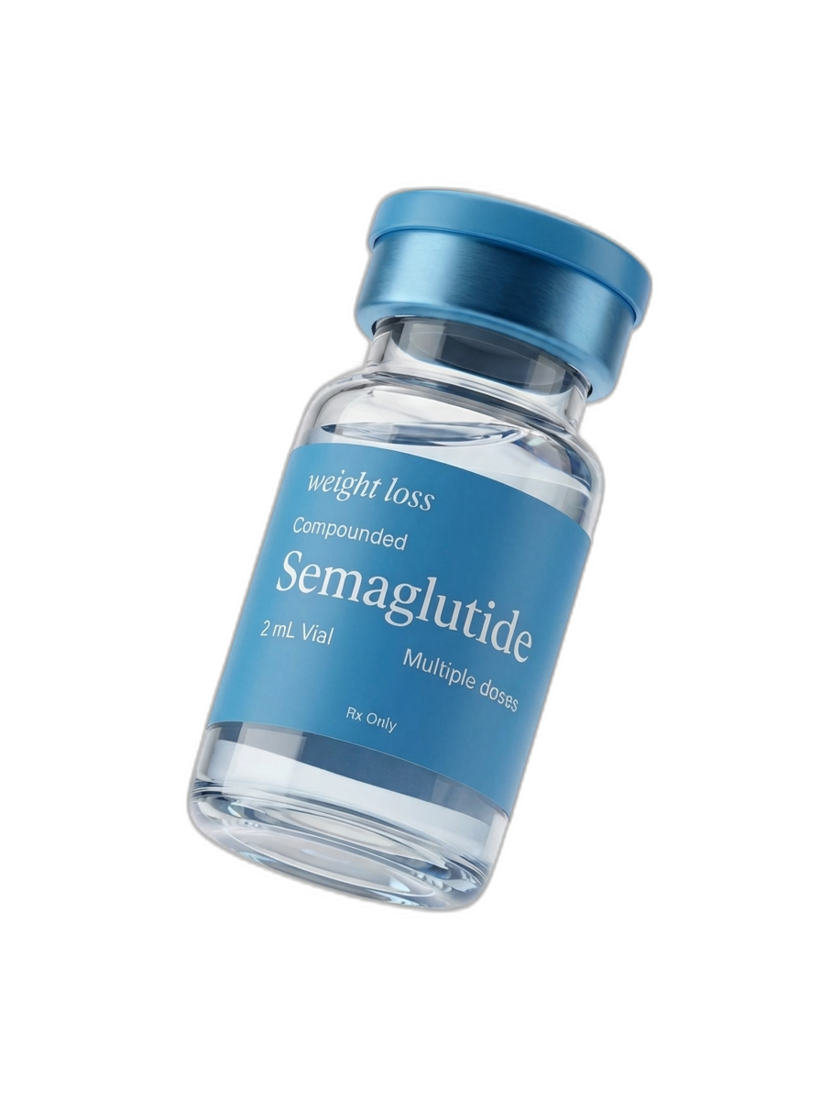
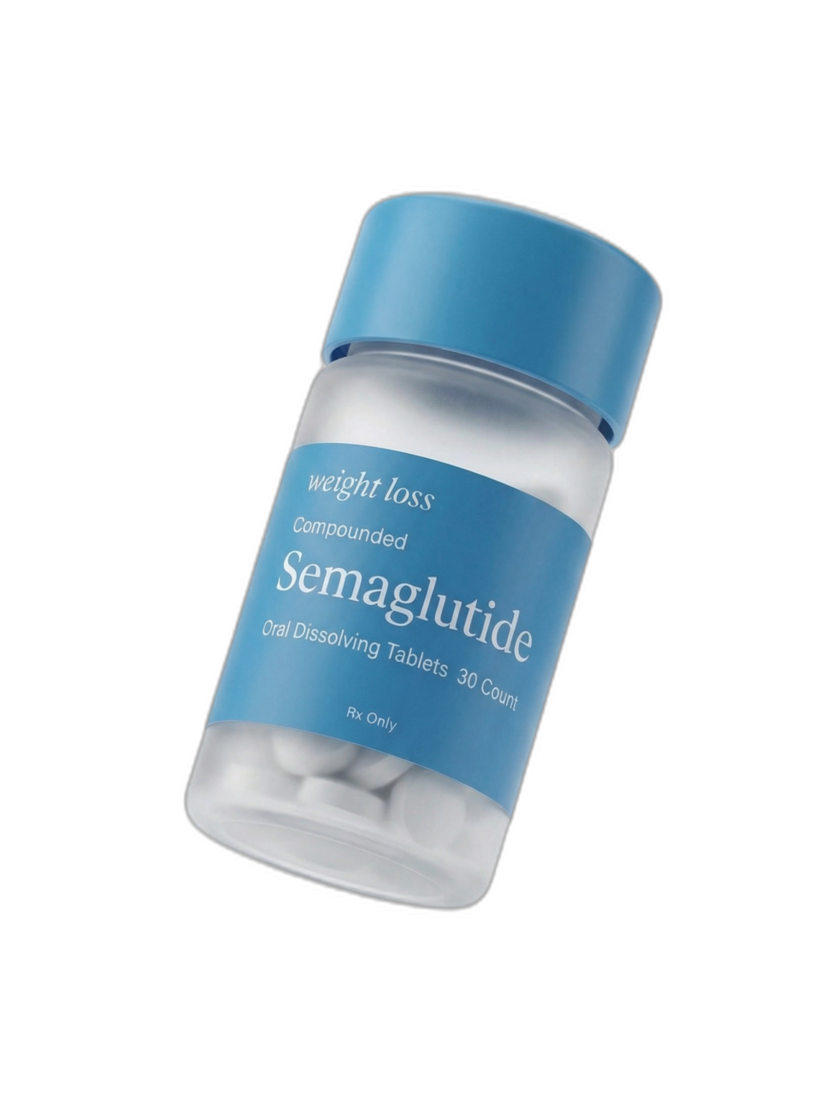
- Oral semaglutide has approximately 1% bioavailability, requiring a much higher daily dose. Injectable semaglutide absorbs at roughly 89%, enabling once-weekly dosing at far lower amounts.
- At their respective maximum doses, oral semaglutide produces an average 9 to 10% body weight loss (PIONEER trials) compared to 15% for injectable semaglutide (STEP trials).
- Oral GLP-1 eliminates needles entirely, making it a genuine option for people with needle phobia or complex travel schedules.
- At Kind MD, injectable semaglutide starts at $199 to $249 per month, making it more affordable than oral semaglutide at $279 per month despite its stronger clinical outcomes.
- Both forms share a similar side effect profile. The right choice depends on your goals, medical history, and personal preferences.
The core question: does delivery method matter?
Yes, delivery method matters significantly. Oral and injectable semaglutide contain the same active molecule, but how your body absorbs each form creates real differences in effectiveness, dosing, and daily routine. Understanding those differences helps you choose the option that fits your goals and lifestyle.
When most people hear about GLP-1 medication, they picture a weekly injection. Semaglutide under the brand names Wegovy and Ozempic established that image. But a daily pill form of semaglutide, sold as Rybelsus, has existed since FDA approval in 2019 for type 2 diabetes management. Compounded oral semaglutide formulations have since become available through telehealth platforms like Kind MD.
The question of oral semaglutide vs injection is not simply about comfort with needles. It is a clinical question about how much drug reaches your bloodstream, what dose you need, what outcomes you can expect, and what your day-to-day treatment looks like. This comparison covers all of it so you can make a genuinely informed choice with your provider.
Side-by-side comparison
Here is a direct comparison of the key factors that affect most patients making this decision.
| Feature | Oral GLP-1 | Injectable GLP-1 |
|---|---|---|
| Administration | Daily pill | Weekly injection |
| Dose | 3 to 14 mg daily | 0.25 to 2.4 mg weekly |
| Bioavailability | ~1% | ~89% |
| Average weight loss | 9 to 10% (PIONEER trials) | 15% (STEP trials) |
| Onset of action | Gradual over weeks | Gradual over weeks |
| Convenience | No needles; strict morning routine required | Once weekly; no daily timing restriction |
| Cost (Kind MD) | $279/mo | $199 to $249/mo |
| Best for | Needle phobia, travel, moderate weight loss goals | Maximum efficacy, cost-conscious patients |
Absorption science: why bioavailability changes everything
The most important difference between oral and injectable semaglutide is not the brand name or the form factor. It is bioavailability, meaning how much of the drug actually enters your bloodstream and becomes active.
Why oral GLP-1 absorbs so poorly
Semaglutide is a peptide molecule, the same class as insulin. Peptides are inherently difficult to absorb through the gastrointestinal tract for two reasons. First, digestive enzymes in the stomach and small intestine break them down before they reach systemic circulation. Second, the intestinal lining does not easily transport large peptide molecules across the gut wall into the bloodstream.
Oral semaglutide (Rybelsus and compounded equivalents) is co-formulated with a permeation enhancer called SNAC (sodium N-[8-(2-hydroxybenzoyl)amino]caprylate). SNAC creates a localized pH change in the stomach that partially protects the semaglutide molecule from enzymatic degradation and briefly increases gut wall permeability to allow absorption. Despite this technology, the resulting bioavailability is approximately 1% of the administered dose.[1]
This is why oral semaglutide doses are measured in milligrams, ranging from 3 mg to 14 mg daily, while injectable semaglutide doses are measured in a fraction of those milligrams, from 0.25 mg to 2.4 mg weekly. The math reflects how much additional drug is needed to compensate for the fraction that reaches circulation via the oral route.
Why injectable GLP-1 absorbs so much better
Subcutaneous injection places semaglutide directly into the tissue layer beneath the skin, bypassing the entire gastrointestinal barrier. From there, it diffuses into the bloodstream with approximately 89% of the administered dose becoming bioavailable.[2] The fatty acid chain modification on semaglutide allows it to bind to albumin in the blood, protecting it from enzymatic degradation and giving it a half-life of approximately 7 days. This is why once-weekly dosing is both practical and effective.
The practical implication is straightforward: at equivalent therapeutic doses, your bloodstream receives roughly 89 times more semaglutide per unit administered via injection compared to the oral route. That difference in circulating drug levels is what drives the difference in clinical outcomes.
Not sure which form is right for your goals?
Take our free 2-minute quiz. A licensed Kind MD provider reviews your answers personally.
Take the Free Quiz →Effectiveness: what the clinical trials show
The bioavailability gap between oral and injectable semaglutide translates directly into measurable differences in weight loss outcomes. The data here is specific and worth knowing before you choose.
PIONEER trials: oral semaglutide evidence
The PIONEER program was the pivotal clinical trial series that established oral semaglutide's safety and efficacy. PIONEER 1 through 10 tested various doses and patient populations for type 2 diabetes management. PIONEER 8, published in Diabetes Care in 2019, is particularly relevant: it showed that oral semaglutide 14 mg (the highest approved daily dose) produced weight loss of approximately 3.3 kg over 52 weeks in people with type 2 diabetes, along with meaningful improvements in glycemic control.[3]
More recent data on oral semaglutide specifically for weight management in people without diabetes suggests weight loss in the range of 9 to 10% of body weight at the maximum 14 mg dose, though the evidence base for this specific population and use case is less extensive than the injectable evidence base.
STEP trials: injectable semaglutide evidence
The STEP program is one of the most robustly studied weight management trial series in modern medicine. STEP 1, published in the New England Journal of Medicine in 2021, enrolled 1,961 adults with obesity or overweight and showed that semaglutide 2.4 mg weekly produced an average body weight loss of 14.9% over 68 weeks, compared to 2.4% with placebo.[4] More than one-third of participants lost 20% or more of their body weight.
For a person starting at 230 pounds, that 15% average translates to roughly 34 pounds of sustained weight loss over 16 months, with loss continuing throughout the trial period.
The difference matters most if you have a significant amount of weight to lose. For someone targeting 30 to 50 pounds or more of weight loss, the 5 to 6 percentage point difference in average outcomes between oral and injectable is clinically meaningful. For someone with more moderate weight loss goals, oral semaglutide may be fully adequate.
Convenience: pills vs. weekly injections
Convenience is not a superficial consideration. Adherence drives outcomes. A treatment you can consistently follow is always more effective than a more potent one you abandon.
What the oral routine actually requires
Oral semaglutide's absorption mechanism places strict requirements on administration. The pill must be taken on an empty stomach, first thing in the morning, with no more than 4 ounces of plain water. You must then wait at least 30 minutes before eating, drinking anything else, or taking other medications. Food, coffee, and most beverages significantly reduce bioavailability, because the SNAC-mediated absorption window is brief and any competing gastric activity interferes with it.
For some people, this routine integrates smoothly into a morning schedule. For others, especially those who travel frequently across time zones, work variable hours, or share a kitchen with others, the daily timing requirement creates friction. Forgetting the pill until after breakfast means missing that day's dose entirely, not just delaying it.
What the injection routine actually requires
Injectable semaglutide is administered subcutaneously once per week, typically in the abdomen, thigh, or upper arm. The injection takes approximately 10 seconds. You choose a consistent day of the week, but you have flexibility on timing, whether morning, evening, or any time in between. Meals, beverages, and other medications do not affect absorption. If you miss your injection day by one or two days, you can still administer the dose and resume your schedule without losing meaningful efficacy.
The only genuine friction point is the needle itself. For most people, subcutaneous injection is considerably less uncomfortable than anticipated. The needles used in modern GLP-1 auto-injectors are 4 to 6 mm in length, thinner than a strand of hair in diameter, and designed to minimize sensation. Many patients report feeling almost nothing. But for people with a true needle phobia, this is a real barrier that oral semaglutide legitimately removes.
"I had never given myself an injection in my life. The first week I was terrified. By week two, it took me less time than brushing my teeth."
Side effects compared
Both oral and injectable semaglutide activate the same GLP-1 receptors throughout the body, so their side effect profiles are broadly similar. The differences are mostly in degree rather than kind.
Serious side effects are rare with both forms. The contraindications are identical: both are not recommended for people with a personal or family history of medullary thyroid carcinoma or multiple endocrine neoplasia syndrome type 2. Your Kind MD provider reviews your full medical history before prescribing either form.
The PIONEER trials showed discontinuation rates due to adverse events of approximately 11% for oral semaglutide at the 14 mg dose, compared to approximately 7% for injectable semaglutide at 2.4 mg in the STEP trials.[3, 4] The slightly higher discontinuation rate with oral may reflect gastrointestinal exposure during absorption, though direct head-to-head comparisons are limited.
Cost breakdown
Brand-name GLP-1 medications, both oral and injectable, carry significant list prices without insurance. Rybelsus (oral semaglutide) carries a list price of approximately $900 to $1,000 per month. Wegovy (injectable semaglutide) is similarly priced. Insurance coverage for weight management GLP-1 medications remains inconsistent across plans, which is why compounded semaglutide from licensed U.S. pharmacies has become the primary access pathway for most patients.
At Kind MD, compounded semaglutide is available at prices that reflect the actual cost of compounding, clinical oversight, and shipping. Injectable semaglutide starts at $199 to $249 per month, depending on your dose stage. Oral semaglutide is priced at $279 per month. The pricing difference reflects higher compounding costs for the oral formulation, which requires SNAC and precise pharmaceutical manufacturing controls beyond what subcutaneous injection requires.
For most patients, injectable semaglutide offers both stronger clinical outcomes and lower monthly cost. Oral semaglutide is priced at a premium that reflects the manufacturing complexity of oral peptide delivery, not greater clinical value.
Who each option is best suited for
Neither form is universally superior. The right choice depends on your clinical goals, lifestyle, and how you respond to treatment. Here is how to think about it.
- You have a genuine fear of needles that would affect adherence
- You travel frequently internationally and face challenges with needle disposal regulations
- Your target weight loss is moderate, roughly 20 to 30 pounds, and 9 to 10% of body weight is sufficient
- You can commit to a consistent morning routine without food or drink for 30 minutes
- Your provider determines oral semaglutide is appropriate based on your medical history and goals
- You want the strongest evidence-based weight loss outcomes available
- You prefer the flexibility of once-weekly dosing with no meal timing restrictions
- Cost is a significant consideration (injectable is lower priced at Kind MD)
- You have a larger amount of weight to lose where the additional 5 to 6 percentage points of average loss are clinically meaningful
- You are open to injections and willing to try the process before making assumptions about discomfort
A third path is also worth knowing: some patients start with oral semaglutide to build familiarity with GLP-1 treatment and reduce any anxiety about the medication class, then transition to injectable if they want to optimize outcomes further. Your Kind MD provider can help you map out a plan that matches where you are starting from and where you want to go.
What matters most is choosing a form you will consistently use and staying in contact with your provider throughout treatment. Both forms work. The best one is the one that fits your life well enough to follow through.